The way people access many professional services has changed considerably. Video calls are now routinely used for work meetings, education and consultations, and counselling has also become increasingly accessible online.
For many people, attending therapy remotely provides a convenient alternative to travelling to a counselling practice.
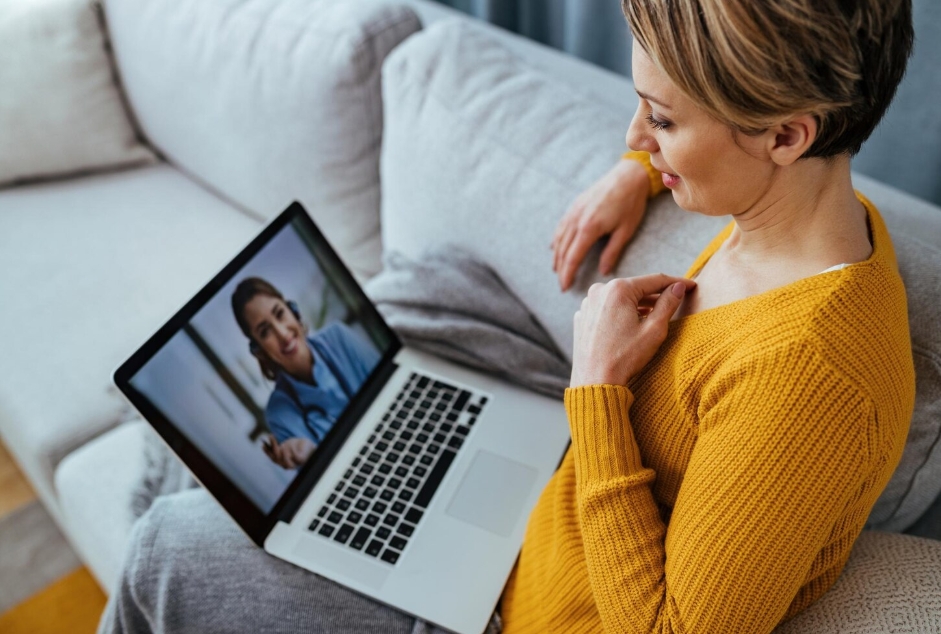
Online counselling generally allows a client and counsellor to communicate through a secure video appointment using a computer, tablet or smartphone. This means professional support can be accessed from home or another suitable private location.
Convenience is one of the most obvious benefits.
Traditional appointments require travel time before and after a session. For someone balancing employment, childcare and other responsibilities, this additional time can make regular appointments difficult to fit into the week.
With online counselling, accessing professional support remotely can make it easier to incorporate counselling into an existing routine without needing to travel to a physical location.
Online appointments can be particularly useful for people living some distance from a suitable counselling practice.
Rather than limiting choices to therapists within convenient travelling distance, remote counselling can provide greater flexibility.
It can also help people whose circumstances make travelling difficult.
Parents may find arranging childcare challenging, while people working long or irregular hours may struggle to reach appointments during conventional times.
Being able to attend from home removes some of these practical barriers.
Privacy remains important.
An online counselling session should ideally take place somewhere you feel comfortable speaking openly without being overheard.
For some people, this might be a private room at home. Others may need to consider an alternative location where they are unlikely to be interrupted.
Using headphones can also provide additional privacy.
Preparing for an online appointment can help create a clearer distinction between counselling and the rest of the day.
If possible, allow a few minutes before the session rather than joining immediately after finishing another task.
Similarly, leaving some time afterwards can provide an opportunity to reflect before returning to work or family responsibilities.
Some people initially wonder whether talking through a screen will feel less personal than meeting face-to-face.
Individual preferences naturally vary.
However, online sessions still provide dedicated time for conversation and allow clients to develop an ongoing therapeutic relationship with their counsellor.
For some people, being in familiar surroundings can actually make initial conversations feel easier.
Technology does require some consideration.
A reliable internet connection and a device capable of video communication are generally important. Testing audio and video before an initial appointment can avoid unnecessary distractions.
It is also sensible to close unrelated applications and silence notifications during the session.
Online counselling can be used to discuss many of the same issues people bring to face-to-face therapy, including stress, anxiety, relationship difficulties, bereavement, confidence and significant life changes.
The important factor is finding an approach and counsellor appropriate for your circumstances.
Online therapy will not be the preferred option for everyone.
Some people value physically leaving their normal environment and attending a dedicated counselling room. Others appreciate the convenience of remote appointments.
Neither preference is inherently better.
What matters is having access to professional support in a format that allows you to communicate comfortably and consistently.
For people whose busy schedules, location or personal circumstances make travelling to regular appointments difficult, online counselling can provide a flexible way to make emotional wellbeing part of everyday life.